

Election Day is Tuesday, November 3, 2026. Polls are open 7 a.m. to 7 p.m., you will need a photo ID or your voter registration card, and if you are in line by 7 p.m., you can vote. This guide covers every race and question that voters in Sayre, Elk City, Clinton, and Weatherford will actually decide — federal, statewide, judicial, and Clinton’s two city races — plus the two state questions.
How this guide works. Every candidate gets their own section: who they are, what they say they stand for, what they say they oppose, and then the honest pros and cons of voting for them from two directions — first from the right, the way a conservative voter weighs it, then from the left, the way a progressive voter weighs it. Those perspective sections are analysis, clearly labeled, based on each candidate’s own stated positions and record. Where a candidate has no campaign website, no public platform, or no findable photo, the guide says so instead of filling in the blanks. Campaign links are included wherever they could be verified.
One thing that surprises people: there are no contested state legislative or county races on your ballot. Under Oklahoma law, a candidate who files unopposed is declared elected without appearing on any ballot, and primary winners with no general-election opponent are in the same position. Every legislative and county race covering our four towns was settled that way earlier this year. Those winners are listed in their own section below so you know who will be representing you — you just won’t see their names on Tuesday.
Your exact ballot depends on your precinct. You can see your personal sample ballot anytime in the OK Voter Portal at oklahoma.gov/elections.
Federal Offices
U.S. Senate — Special Election
This is a special election for an open seat: Markwayne Mullin resigned, and the interim appointee, Alan Armstrong, is not running. Five candidates are on the ballot.
Kevin Hern (R)
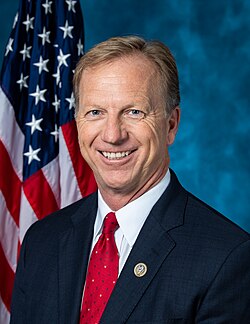
Hern, 64, of Tulsa, has represented Oklahoma’s 1st District in the U.S. House since 2018. An aerospace engineer turned McDonald’s franchise owner (he built up 18 Tulsa-area restaurants), he sits on the Ways and Means Committee and formerly chaired the Republican Study Committee. He is endorsed by President Trump.
Stands for: An “America First” agenda — extending the Trump tax cuts and improving small-business access to capital; border security including wall funding; a balanced-budget amendment, federal spending cuts, and congressional term limits; Second Amendment rights, pro-life legislation, school choice, veterans, and religious liberty.
Opposes: Government-run health care (he backs free-market reform); abortion; at his campaign launch he attacked the “radical left” and “RINOs” opposing Trump’s agenda, and he pledges deportation of dangerous undocumented immigrants.
From the right — Pro: A proven conservative vote with a Trump endorsement and real Washington experience; his business background and Ways and Means seat carry weight on tax policy, the issue he would deal with most. Con: Eight years in the House means he is very much a Washington insider in a year when many Republican voters are tired of insiders, and his record is more establishment than insurgent.
From the left — Pro: He is a known quantity with a reputation for working on tax and small-business policy rather than chasing cameras, and he supports term limits. Con: His agenda extends tax cuts progressives say favor the wealthy, hardens immigration enforcement, and restricts abortion — the core of what progressive voters oppose.
Links: Campaign website
N’Kiyla Jasmine Thomas (D)
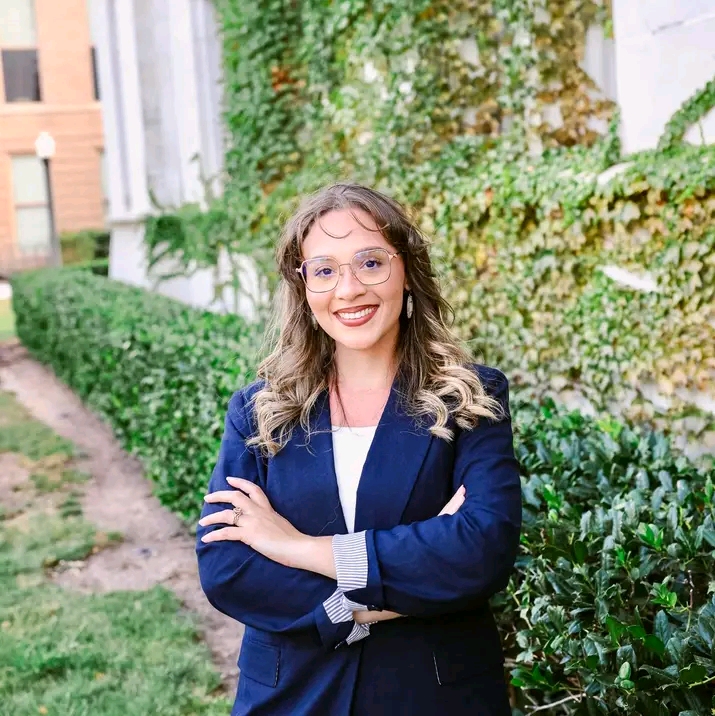
Thomas, of Ardmore, is a nurse, an active-duty military spouse, a citizen of the Chickasaw Nation, and the mother of an autistic son. This is her first run for office. She describes herself as a democratic socialist, though she is not a member of the Democratic Socialists of America.
Stands for: Health care access for all, especially in rural and underserved communities like ours; fixing the nursing shortage; protecting and expanding the Affordable Care Act and Medicare for All; a federal minimum wage tied to the cost of living, paid family leave, and price-gouging protections; fully funded special education, higher teacher pay, free school meals, smaller classes, and universal affordable child care; tribal sovereignty and military-family support.
Opposes: Corporate PAC and AIPAC money — she refuses both; she has said she would work in her first 100 days to impeach, remove, and convict President Trump, and she supports ending ICE as it currently operates.
From the right — Pro: She is an outsider with a real-world nursing background who takes no corporate PAC money, and her focus on rural health care speaks to a genuine western Oklahoma problem. Con: Her platform is the most explicitly socialist in the race — Medicare for All, a federal wage mandate, and impeaching the president are all non-starters for conservative voters. She supports many of the ideas that the Democratic Socialists have.
From the left — Pro: She is the boldest progressive in the race: Medicare for All, special-education funding, teacher pay, and tribal sovereignty, all without corporate money. Con: She has never held office, runs in one of the most Republican states in the country, and positions like abolishing ICE as it exists may make her an uphill general-election candidate.
Links: Campaign website
Sevier White (L)
White, of Norman, is a former teacher and wrestling coach who has run for Congress as a Libertarian before (in 2000 and 2016). He has held no elected office.
Stands for / opposes: No stated platform could be found. The League of Women Voters guide lists his positions as “not available at press time” in every category, and no campaign website or campaign Facebook page exists that we could find. (No photo found.)
From the right — Pro: A Libertarian option exists for voters who want to register a small-government protest vote. Con: With no published platform, a vote for White is a vote for a question mark.
From the left — Pro: The same protest-vote option applies for voters dissatisfied with both major parties. Con: There is no public record of where he stands on anything, so progressive voters cannot know if he shares any of their priorities.
Ron Meinhardt (I)
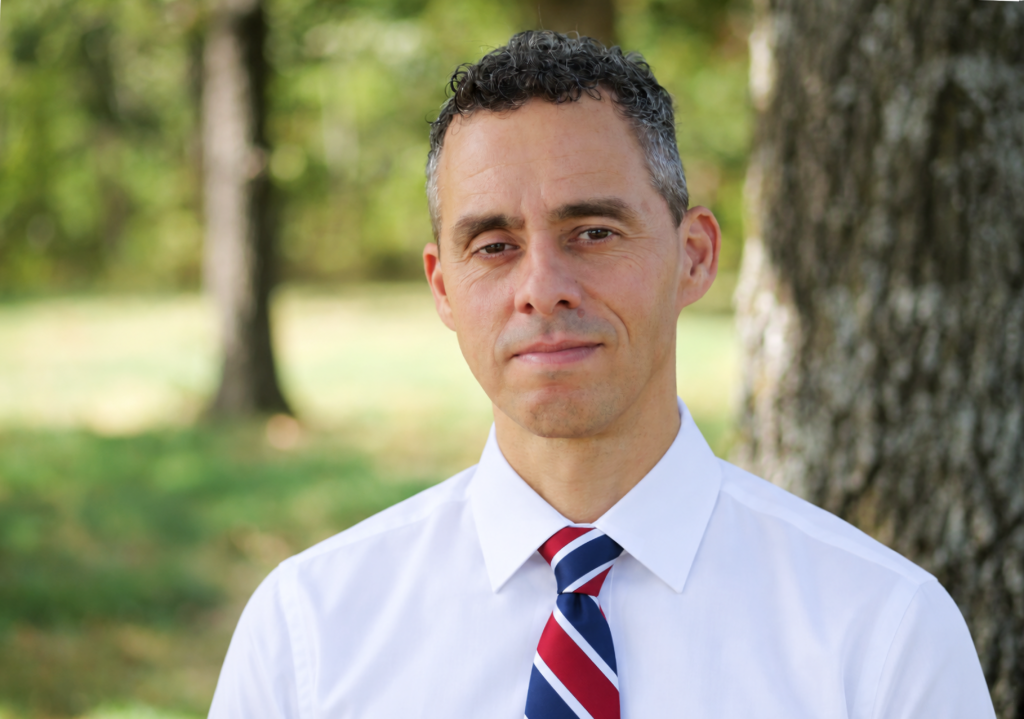
Meinhardt, 47, of Nowata, is a former registered nurse and the executive director of Entering Wedge Media. A registered Republican, he is running as an independent in opposition to his own party’s nominee after first filing in the GOP race.
Stands for: Constitutional accountability — Congress must authorize war, with strict War Powers adherence and no “forever wars”; energy affordability and a lower cost of living; fiscal responsibility; health-care reform that serves patients over corporate systems, including health freedom and the Make America Healthy Again agenda; enforcing immigration law; protecting children from trafficking and strengthening parental rights; no data centers or major industrial projects without informed local consent.
Opposes: The Inola aluminum smelter and other major industrial projects without local support; abortion; “party-boss endorsements,” blind party loyalty, and donor capture of politics.
From the right — Pro: Constitution-first positions on war powers and federal overreach, pro-life, pro-border enforcement — a conservative platform without the party machine. Con: Independents rarely win statewide in Oklahoma, and his break with the GOP nominee splits the right-of-center vote.
From the left — Pro: His anti-war, anti-corporate-capture message and insistence on local consent for big industrial projects overlap with progressive concerns. Con: His positions on abortion, immigration enforcement, and health freedom run against progressive priorities, and he has no governing record.
Links: Campaign website
Curtis Stinnett (I)
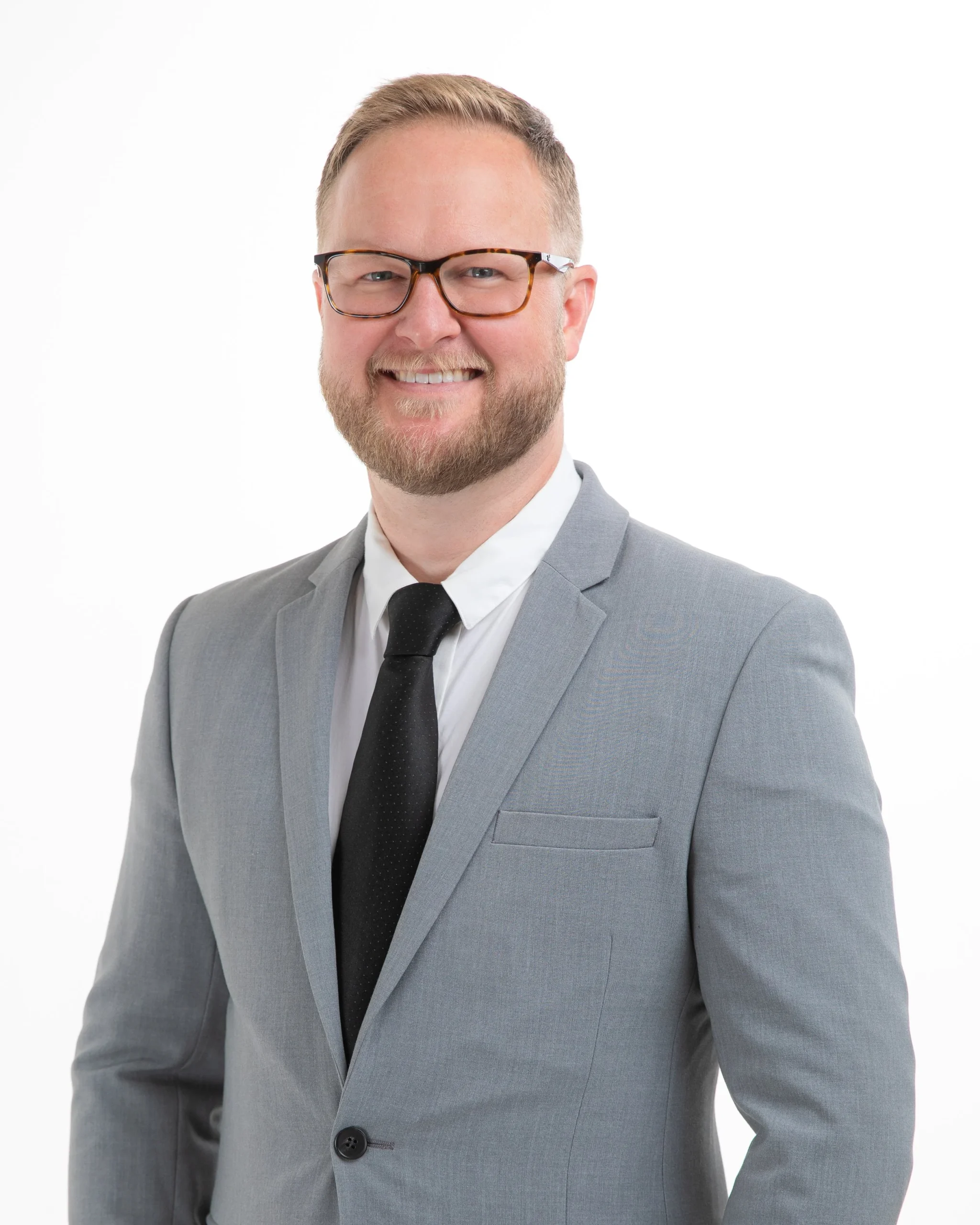
Stinnett, 40, of Tulsa, grew up in Lindsay and earned his pharmacy doctorate at Southwestern Oklahoma State University in Weatherford — the only candidate in this race with a direct corridor tie. He is a practicing pharmacist and a first-time candidate who describes himself as a democratic socialist.
Stands for: Medicare for All — single-payer health care with no-cost lifesaving drugs; a living wage set by county living costs; equal rights and a new Equal Rights Amendment; reparations for Black Americans under a 25-year proposal that would also include tribal citizens; codifying Roe v. Wade; overturning Citizens United — his stated first priority; ending military aid to Israel; and energy independence through nationalizing utilities.
Opposes: Money in politics above all — his campaign takes no donations at all, not even a donate button; U.S. energy exports, which he says raise domestic prices; any move to make abortion illegal, which he says he will “oppose utterly.”
From the right — Pro: Whatever you think of his politics, a candidate who takes zero donations is genuinely independent of donors. Con: His platform — single-payer health care, reparations, nationalized utilities — is about as far from conservative economics as a platform gets.
From the left — Pro: This is the full progressive program, argued openly, with no corporate money behind it, and his local SWOSU roots are real. Con: Several planks (nationalizing utilities, a 25-year reparations program) have no plausible path through the Senate, and he has no electoral track record.
Links: Campaign website
U.S. House — District 3
Frank Lucas (R) — Incumbent
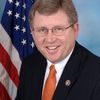
Lucas, 66, of Cheyenne, is western Oklahoma’s congressman and has been since winning a special election in 1994. A fifth-generation Oklahoman, wheat farmer, and cattle rancher, he is the longest-serving Republican on both the Agriculture and Financial Services committees, a former Agriculture Committee chairman, and has had a hand in writing every Farm Bill since 1996.
Stands for: Second Amendment rights and pro-life policy; family farms, rural broadband, saving rural hospitals, and fair trade; lower taxes and fewer regulations for families and small businesses; veterans’ access to earned health care and education benefits; a strong national defense and border security, including backing Altus and Vance Air Force Bases.
Opposes: Federal spending and debt — “Washington has a spending problem” — and what he calls the previous administration’s ideological overreach on immigration, inflation, and regulation.
From the right — Pro: Three decades of seniority translate directly into farm-policy clout for this district; he is a reliable conservative vote with deep agricultural credibility. Con: Thirty-two years in Washington is the definition of career politician, and some conservatives argue the district’s interests would benefit from new energy rather than seniority.
From the left — Pro: He is a serious, policy-focused legislator who defends rural hospitals and farm programs, not a bomb-thrower. Con: His votes consistently support tax and regulatory policies progressives oppose, and his long tenure makes him a symbol of the status quo they want changed.
Links: Campaign website
Suzie Byrd (D)

Byrd, of Enid, has owned or partnered in more than a dozen businesses in Oklahoma and Florida and is a former reporter for the Enid News & Eagle. She calls hers a “purple campaign” aimed at voters in both parties and pledges to serve no more than four years — time, she says, to “rotate the crops” in Washington.
Stands for: Universal health care — “We are the richest country in the world and we can afford it”; planning ahead for AI and data centers, with attention to Oklahoma’s water supply, privacy, family farms, and Social Security; a living wage and affordable housing, including help for first-time buyers; tax fairness, ending tax cuts for the wealthy; and immigration reform.
Opposes: Raising the Defense Department budget; the for-profit health care model; tax cuts for the wealthy; and the growing influence of corporations and long incumbency in politics.
From the right — Pro: A term-limit pledge and a business background, plus a stated desire to campaign to Republicans as well as Democrats. Con: Universal health care and ending tax cuts are core progressive positions that conservative voters in District 3 largely reject.
From the left — Pro: Universal health care, tax fairness, data-center caution, and a self-imposed term limit — with a cross-party pitch that fits a heavily Republican district. Con: She has no campaign website and has raised little money, so this is a shoestring challenge against one of the most entrenched incumbents in Congress.
Links: Campaign Facebook — she has no campaign website; Facebook is where her campaign lives.
Statewide Offices
Governor
The governor’s office is open for the first time in eight years. Five candidates are on the ballot.
Mike Mazzei (R)
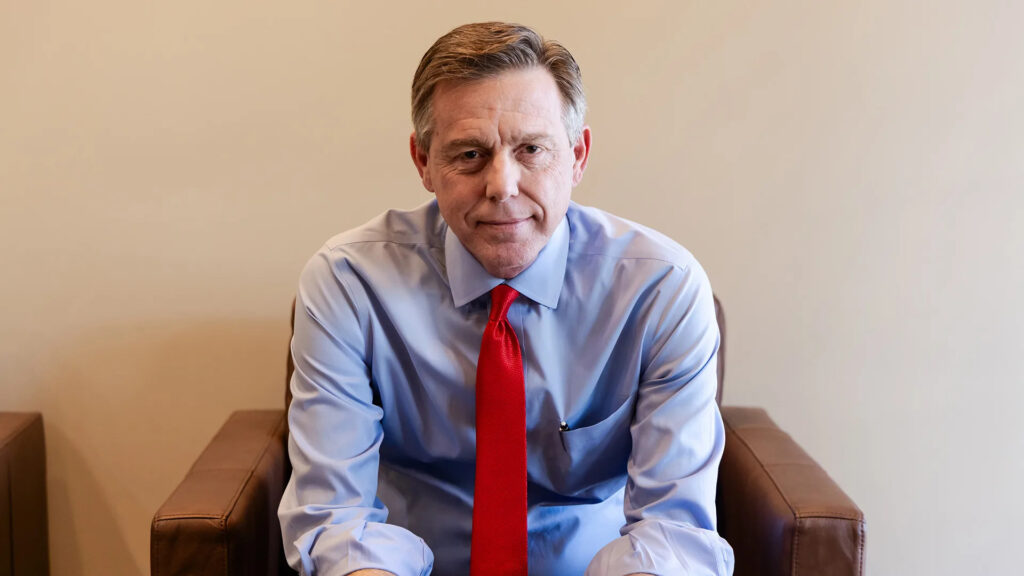
Mazzei, 61, of Tulsa, is a financial adviser who founded Trinity Strategic Wealth. He served in the state Senate from 2004 to 2016, chairing the Finance Committee, and was Gov. Stitt’s Secretary of Budget in 2019–2020. He is endorsed by President Trump.
Stands for: Eliminating the state individual income tax within six years; eliminating property tax for seniors and veterans; stopping foreign ownership of Oklahoma land and closing shell-company loopholes; education reform including a statewide literacy director, reading by third grade, CareerTech expansion, and moving school-board elections to November with partisan labels; government accountability through a state DOGE tying agency budgets to results; and support for the Inola aluminum smelter and for data centers that provide their own power.
Opposes: Abortion in all circumstances — his campaign states “life begins at conception”; warrantless Flock license-plate tracking of law-abiding drivers; foreign and cartel-linked land and marijuana operations; and special-interest tax breaks for green energy and data centers. His campaign attacks Munson’s record on taxes, girls’ sports, and taxpayer funding for gender-transition procedures for minors.
From the right — Pro: This is the full conservative wish list with a budget expert’s résumé behind it — income-tax elimination, property-tax relief for seniors and veterans, land protection, and a Trump endorsement. Con: Eliminating the income tax in six years is an enormous fiscal promise, and even sympathetic conservatives ask what gets cut or what replaces the revenue.
From the left — Pro: His opposition to warrantless license-plate surveillance is a genuine civil-liberties position, and his literacy focus is serious policy. Con: Progressives see the tax plan as tilted to the wealthy, the property-tax pledge as a threat to school funding, and his social positions — abortion with no exceptions, attacks over girls’ sports — as disqualifying.
Links: Campaign website · Facebook
Cyndi Munson (D)
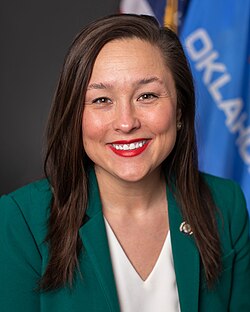
Munson, 41, of Oklahoma City, was raised in Lawton. She has represented House District 85 since 2015, has served as House Minority Leader since 2022, and is the first Asian American woman elected to the Oklahoma Legislature. Before politics she spent more than a decade in nonprofits, including the Girl Scouts of Western Oklahoma.
Stands for: Fully funding public schools with competitive teacher and support-staff raises, free school breakfast and lunch, and an expanded Oklahoma’s Promise; targeted tax relief — an expanded childcare tax credit, sales-tax relief credit, and earned income tax credit — plus a higher minimum wage and paid family leave; protecting Medicaid and expanding rural prenatal, maternity, and mental-health care; a state question to overturn Oklahoma’s abortion ban and codify abortion access in the state constitution; tribal sovereignty, including restoring a permanent Secretary of Native American Affairs; and an “all of the above” energy policy.
Opposes: Broad income-tax cuts she says benefit the wealthiest; the Parental Choice Tax credit voucher program, which she pledges to repeal as a diversion of nearly $300 million in public money to private schools; the Inola smelter’s $200 million-plus in taxpayer incentives to a foreign corporation; new data centers without rules — she pledges a day-one moratorium; and corporate giveaways generally.
From the right — Pro: Her targeted-tax-relief approach at least acknowledges costs, and her rural maternity-care focus addresses a real western Oklahoma need. Con: Repealing school choice, raising the minimum wage, and putting abortion access in the state constitution place her firmly against the conservative mainstream in Oklahoma.
From the left — Pro: This is the progressive governing agenda — public schools, Medicaid, paid leave, abortion access, tribal sovereignty — from a candidate with a decade of legislative leadership experience. Con: She has led the smallest minority in the state House, has never had to assemble a governing majority, and her platform would face a Republican supermajority legislature from day one.
Links: Campaign website · Facebook
Robert E. Brooks Sr. (I)
Brooks, 47, of Moore, grew up on a small farm near Lindsay and owns an insurance agency. His work history, per his campaign, includes welding, machining, police work, county jail and dispatch duty, sheriff’s deputy and detective work, firefighting, and EMT service; he also briefly served as Latimer County sheriff, according to Focal News. He runs as the “Farmer Servant.” (No verified photo found.)
Stands for: A “People’s App” — registered voters would weigh in before the governor signs or vetoes bills, issues pardons, or makes major decisions, and the governor commits to following the majority and “showing the receipts”; transparency dashboards for state government; parents, teachers, and students first in education; constitutional and property rights; rooting out government corruption; eliminating taxes; and fair sentencing and rehabilitation.
Opposes: Career politicians — “Every other candidate in this race has already held office. They had the power to make things better and didn’t”; pay-to-play politics; lobbyists; and turnpike and tax expansion. He also questions leaders promoting the foreign-backed Inola project.
From the right — Pro: His anti-corruption, direct-democracy pitch and his long blue-collar résumé appeal to voters who feel both parties ignore working Oklahomans. Con: Binding a governor to app votes is untested and arguably unworkable, and his “eliminate taxes” language comes without a fiscal plan.
From the left — Pro: The transparency and anti-pay-to-play commitments are real, and his background is genuinely working-class in a race full of professionals. Con: Direct-app governance could override minority rights and deliberation, and his proposals are short on detail.
Links: Campaign website
Orlando Lynn Bush (I)
Bush, 61, of Edmond, is a mental-health advocate. Beyond that, almost nothing public exists: he did not return voter-guide questionnaires, and one guide noted he declined to participate in requests about his campaign. The only priority list available, from the Tulsa Flyer’s voter guide, includes states’ rights, women’s health care, consumer protection and fraud, farming, oil and gas and international trade, education focused on reading, writing, math, language, and STEAM, and “nutritional global leadership.” (No campaign website, no campaign Facebook page, and no photo found.)
From the right — Pro: States’ rights and support for farming and energy appear on his short list of themes. Con: A candidate who declines to answer questionnaires gives voters nothing to evaluate; there is effectively no campaign to judge.
From the left — Pro: Women’s health care and consumer protection appear among his themes. Con: Same problem from this side — no platform, no website, no answers. Progressive voters cannot verify he represents any of their priorities.
Jerry Griffin (I)
Griffin, 82, of Tulsa, served on the Tulsa Public Schools Board of Education from 2020 to 2024. An educator by training — bachelor’s and doctorate in educational leadership from the University of Tulsa, an MBA from SMU — he founded and leads the Palmego Company and reports Marine Corps and law enforcement service. He first filed for state superintendent before focusing on the governor’s race. (No photo found. His campaign site, governorgriffin2027.com, is listed in voter guides but did not load when checked — listed here for completeness, not as a verified link.)
Stands for: Children’s reading skills — his signature issue, with a reading-centered education-reform blueprint he published in 2023; government accountability for public spending; public safety and individual freedoms; working respectfully with tribal nations, both parties, and local governments; and rural health care and infrastructure, running “for all Oklahomans” independent of party control.
Opposes: He makes no specific attacks on opponents, policies, or projects; his framing is explicitly anti-party-control rather than anti-anyone.
From the right — Pro: A veteran and educator focused on reading fundamentals and spending accountability, without partisan baggage. Con: At 82, with a minimal campaign footprint and no functioning website, questions about capacity and viability are fair.
From the left — Pro: Early literacy, rural health care, and tribal respect are shared priorities, and he campaigns without culture-war attacks. Con: There is too little public detail on health care, school funding, or social policy for progressive voters to measure him against their agenda.
Lieutenant Governor
T.W. Shannon (R)
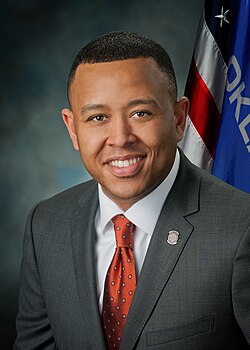
Shannon, 48, a Lawton native now of Oklahoma City, served in the state House from 2007 to 2015 and as Speaker in 2013–14 — the youngest Speaker in state history and the first African American and first Chickasaw citizen to hold the post. He has been a bank CEO and Transportation Commissioner and served as a senior adviser on rural prosperity in the Trump administration in 2025–26. (The photo above is his official 2012 portrait.)
Stands for: Growing the economy as the state’s “chief marketing officer”; cutting taxes and red tape; supporting farmers and ranchers and building on energy, agriculture, aerospace, and tribal enterprises; backing law enforcement; and school choice — “fund the students, not the system.”
Opposes: “Liberal bureaucrats, woke mandates and radical policies,” DEI mandates, and higher taxes and more government. He has publicly rejected the claim that America is systemically racist, calling it instead a land of “systemic opportunity.”
From the right — Pro: A former Speaker with an economic-development focus and Trump-administration ties; conservatives get a lieutenant governor who would champion tax cuts and school choice. Con: He lost U.S. Senate primaries in 2014 and 2022, and critics on the right have long questioned whether his ambitions outrun his record.
From the left — Pro: His personal story — first Black and Chickasaw House Speaker — is genuinely historic, and his emphasis on tribal enterprise is notable. Con: His “woke mandates” rhetoric and school-choice advocacy put him squarely against progressive education and civil-rights priorities.
Links: Campaign website · Facebook
Kelly Forbes (D)
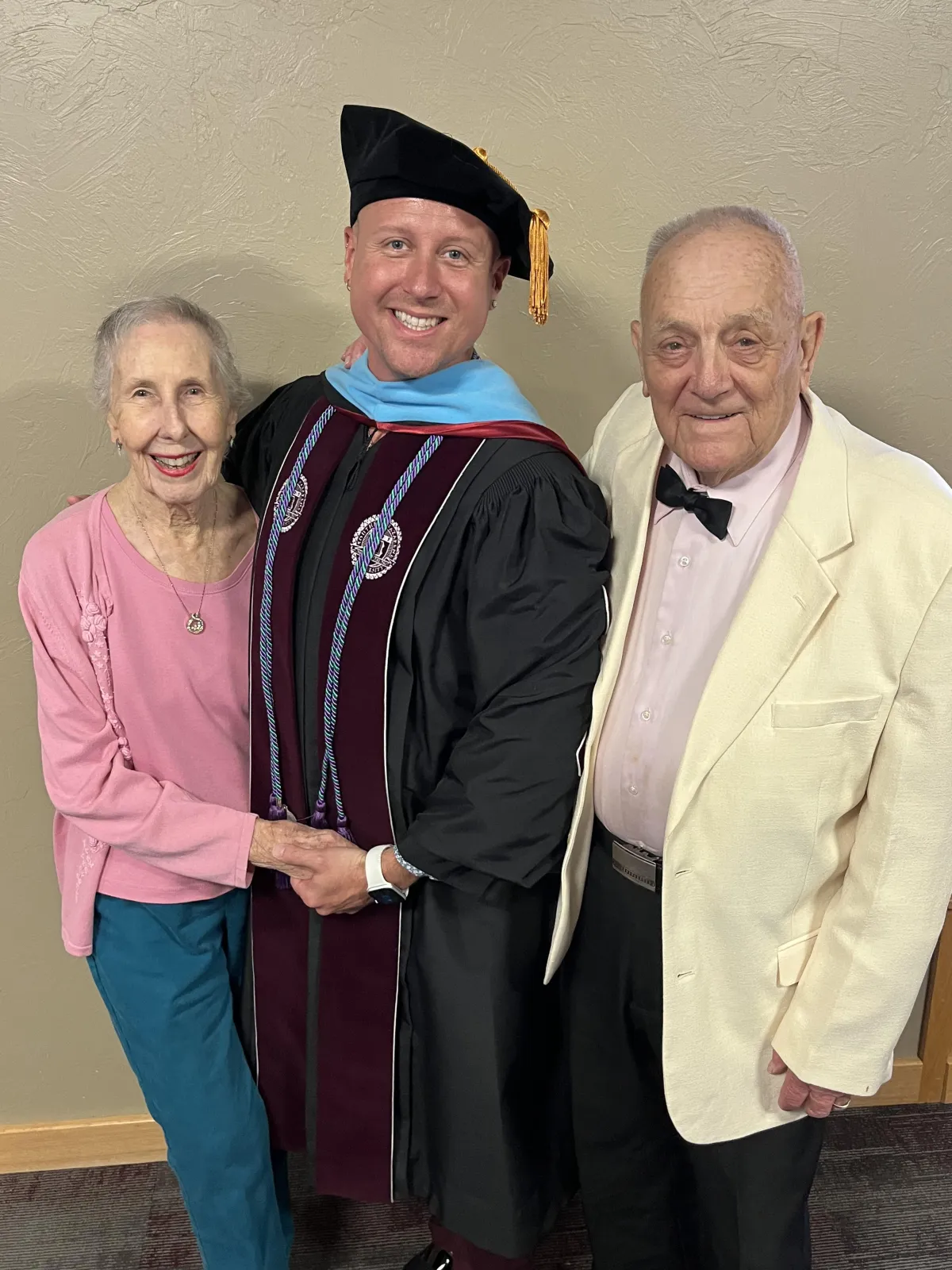
Forbes, of Oklahoma City, is a career educator — classroom teacher, assistant principal and principal, federal programs director, and director of dual-language education — with a doctorate in administration and leadership from Southern Nazarene University. He runs an education and government consulting firm and serves on the board of Palomar, Oklahoma City’s family justice center. This is his first run for office.
Stands for: His campaign’s five stated priorities: build a stronger economy; invest in public education; expand access to and affordability of health care; promote tourism; and fight corruption and hold Oklahoma’s government accountable. He also supports keeping public dollars in public schools, small businesses and CareerTech, and action on food insecurity and affordable housing.
Opposes: Diverting public money from public schools through school-choice expansion, and corruption and lack of transparency in state government. He and the state Democratic Party publicly condemned Shannon’s October 2026 comments about public schools, in which Shannon agreed it was “correct” to say he doesn’t love public schools and equated supporting them with “government worship.”
From the right — Pro: A practitioner, not a theorist, on education, with an anti-corruption message conservatives can respect. Con: His opposition to school choice conflicts with the direction Republican voters have taken Oklahoma, and he has no electoral experience.
From the left — Pro: Public-school funding, health care access, and accountability from an educator who has actually run schools — the progressive case for this office. Con: A first-time candidate in a down-ballot race in a deep-red state faces the same structural uphill climb as every Democrat on this list.
Links: Campaign website
Attorney General
Jon Echols (R)
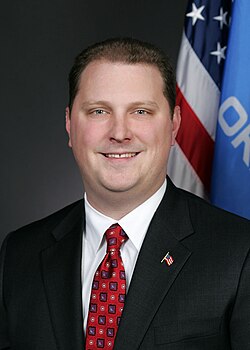
Echols, 46, of Oklahoma City, represented House District 90 from 2012 to 2024 and served eight years as House Majority Floor Leader — the longest tenure in that job in state history. He is an attorney and small-business owner who co-founded TK Health, a jail health-care provider, in 2009. (Photo: his 2013 official portrait.)
Stands for: Public safety as his stated No. 1 priority, in partnership with law enforcement — he is endorsed by 68 of Oklahoma’s 77 county sheriffs and the Fraternal Order of Police; ridding the state of illegal marijuana operations and fighting fentanyl trafficking; rooting out waste, fraud, and abuse, citing his role creating the Legislative Office of Fiscal Transparency; defending Oklahoma’s conservative laws, including the state abortion ban (he calls himself “100% pro-life”), and continuing the state’s consumer lawsuit against State Farm; and stronger relations with tribal nations — “more compacts, less lawsuits.”
Opposes: DEI initiatives in state government and men in women’s sports; foreign-adversary ownership of Oklahoma farmland; and illegal immigration — he authored the state’s “impermissible occupation” law. In the October debate he attacked Coffey’s experience directly.
From the right — Pro: A decade of conservative lawmaking, overwhelming law-enforcement endorsements, and a promise to defend the state’s conservative laws in court — this is the establishment conservative choice. Con: His co-founded company’s business — providing health care in jails — has drawn lawsuits and scrutiny, and some conservatives would prefer an AG with a prosecutor’s background rather than a legislator’s.
From the left — Pro: His “more compacts, less lawsuits” line on tribal relations is less combative than recent AG history. Con: Progressives see a pledge to defend the abortion ban and attack DEI as the office’s central mission, plus unresolved questions about his private company’s government contracts.
Links: Campaign website
Nick Coffey (D)
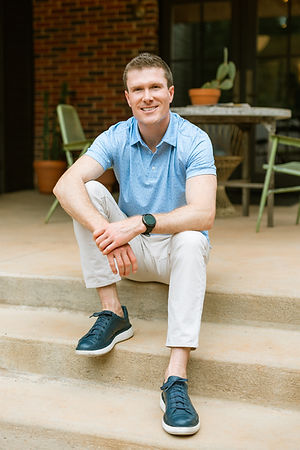
Coffey, 35, of Oklahoma City, spent about seven years as an Assistant U.S. Attorney for the Western District of Oklahoma, prosecuting drug cartels (including coordinating extraditions of Mexican cartel leaders), money laundering, illegal firearms, and fraud. He served on the Justice Department’s organized crime drug task force and was named the office’s Prosecutor of the Year in 2024, its youngest recipient. He is now a trial attorney at Crowe & Dunlevy. This is his first campaign.
Stands for: Rooting out corruption through a new Office of Public Integrity to investigate officials who abuse power; public safety — illegal firearms, cartels, and protecting kids from online predators; protecting private property and Oklahoma land from foreign entities; acting as a watchdog for tax dollars and against predatory business practices; and keeping politics out of the office — “the AG should be a prosecutor, not a politician.” His campaign sums it up as “corruption, crime, children and costs.”
Opposes: “Sweetheart deals” and “get-out-of-jail-free cards” for politicians, unconstitutional laws “that only serve the elite,” and the politicization of the AG’s office. He attacks Echols’ ties to TK Health, the jail health-care provider facing wrongful-death and inadequate-care lawsuits. Both candidates say they would continue the current AG’s lawsuit over the foreign-backed Inola smelter.
From the right — Pro: A cartel prosecutor with a genuinely tough-on-crime record and an anti-corruption office aimed at politicians of any party. Con: He is a Democrat in a state that has not elected one to this office in decades, and conservatives will note he has never run anything larger than a caseload.
From the left — Pro: Corporate accountability, anti-corruption enforcement, and a promise to keep the office out of culture-war litigation — the progressive prosecution model. Con: His pitch is more good-government than ideological, which may not energize the base in a low-information down-ballot race.
Links: Campaign website
State Treasurer
No Democrat filed for this office. Incumbent Auditor Cindy Byrd won the Republican primary against the sitting treasurer, and Libertarian Kiefer Perry is the only alternative on the ballot.
Cindy Byrd (R)
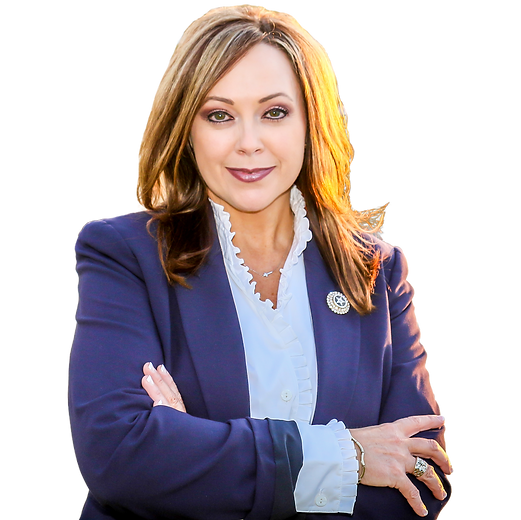
Byrd, a CPA from Coalgate, is the incumbent State Auditor — the first woman elected to that office — and is term-limited out of it. She beat incumbent Treasurer Todd Russ in the Republican primary with about 62% and is endorsed by President Trump.
Stands for: Auditor-grade transparency for state investments; a review of the contracts behind the new $200 million Taxpayer Endowment Trust Fund; fixing the Treasurer’s systems modernization, which briefly halted tax refunds in September; cutting unclaimed-property delays; and helping agencies plan for reduced federal funding.
Opposes: Waste, corruption, and special interests — and political influence in state investing. Her line: “Money is green. It is not red or blue.”
From the right — Pro: She built her reputation auditing government waste, and conservatives get an actual CPA watching the state’s money. Con: She primary-defeated a sitting Republican treasurer, which split the party, and some conservatives question an auditor’s instincts translating to an investment office.
From the left — Pro: Her anti-corruption record is real and nonpartisan in tone — “money is green” is the pitch. Con: She is a Trump-endorsed Republican whose fiscal views align with the party progressives oppose, and there is no Democrat on this ballot for them regardless.
Links: Campaign website
Kiefer Perry (L)
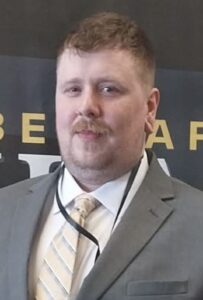
Perry, 37, is a Lowe’s retail merchandiser and vice chair of the Oklahoma Libertarian Party. A first-time candidate and self-described minarchist, he is running partly to secure the 2.5% of the vote Libertarians need to keep ballot access.
Stands for: “Open ledgers” — publishing Treasury data online in plain, readable form; debt reduction and cautious investing; fewer hurdles for business; and limited government generally.
Opposes: State financial business awarded on political connections and campaign contributions, and waste and mismanagement in state finance.
From the right — Pro: Radical transparency and debt reduction are easy positions for fiscal conservatives to like. Con: The Treasurer’s office manages billions; conservatives may prefer the CPA.
From the left — Pro: Publishing the state’s books in plain language serves everyone’s accountability interests. Con: Minarchist economics — minimal government as an end in itself — conflicts with progressive views of what the state should do.
Links: Campaign website · Facebook
Superintendent of Public Instruction
An open seat: Ryan Walters resigned in September 2025. Neither nominee is the incumbent.
Dr. Robert Franklin (R)
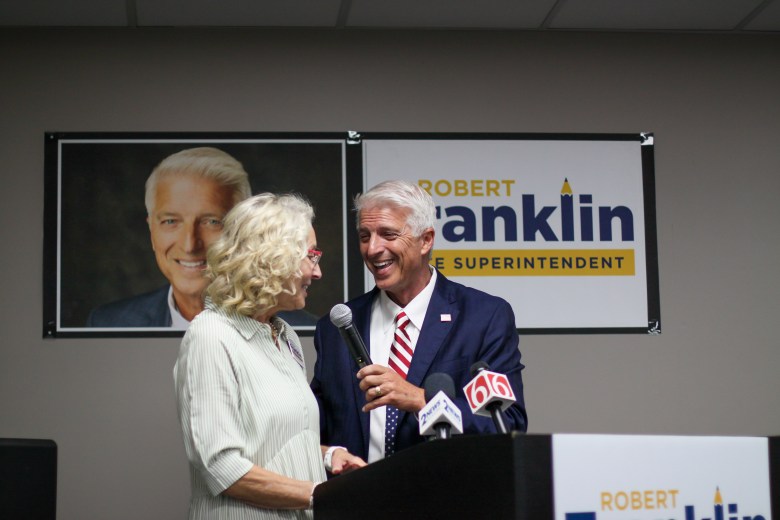
Franklin, 67, of Sand Springs, spent 44 years in education as a special-education teacher, principal, and administrator, including as a Tulsa Tech associate superintendent, and was inducted into the Oklahoma Educators Hall of Fame in 2024. He chaired the Statewide Virtual Charter School Board from 2018 to 2024 and won the Republican runoff with about 55%.
Stands for: “Back to basics” — reading, math, discipline, and early literacy intervention; rebuilding the teacher pipeline, his stated first priority; parent engagement and transparency; school choice with accountability; and expanding CareerTech and apprenticeships.
Opposes: “Political noise, ideological distractions,” and culture-war fights in schools. Notably, as a charter board member he voted against the proposed publicly funded religious charter school in 2023, and he opposes religious instruction in public schools.
From the right — Pro: Back-to-basics discipline and literacy, teacher recruitment, and school choice with accountability — the mainstream conservative education program, from a 44-year educator rather than an activist. Con: His vote against the religious charter school and his criticism of culture-war fights put him at odds with the Walters wing of the party.
From the left — Pro: A career educator who opposed the religious charter school and wants the politics turned down — a sharp contrast with the Walters era. Con: He still supports school choice, which progressives argue drains public schools, and his accountability framework comes from the Republican mainstream.
Links: Campaign website · Facebook
Dr. Jennettie Marshall (D)
Marshall, 68, of Tulsa, is a pastor and Tulsa Police Department chaplain who served two terms on the Tulsa Public Schools board (2017–2025). She previously worked 17 years for the Department of Corrections and three years as a DHS child-welfare investigator.
Stands for: Her “Marshall Plan” — a top-to-bottom accountability review of the state Education Department; data-driven standards; recruiting and retaining teachers with pay moving toward regional competitiveness; fixing special-education funding and caseloads; and tackling chronic absenteeism.
Opposes: Political influence over curriculum, and Education Department dollars “diverted to political operatives” — a direct shot at the Walters era.
From the right — Pro: Accountability audits and data-driven standards are language conservatives use too, and her corrections background is a discipline credential. Con: Her plan points toward more spending and a stronger state role in local schools, which runs against the conservative direction of the last decade.
From the left — Pro: Teacher pay, special-education funding, and an explicit cleanup of the Walters-era department — the progressive education agenda from someone who has sat on a school board. Con: School-board experience in one urban district is a long step from running a state agency, and the general-election math for Democrats in Oklahoma is what it is.
Links: Campaign website · Facebook
Commissioner of Labor
An open seat (Leslie Osborn is term-limited) with three candidates.
Kevin West (R)
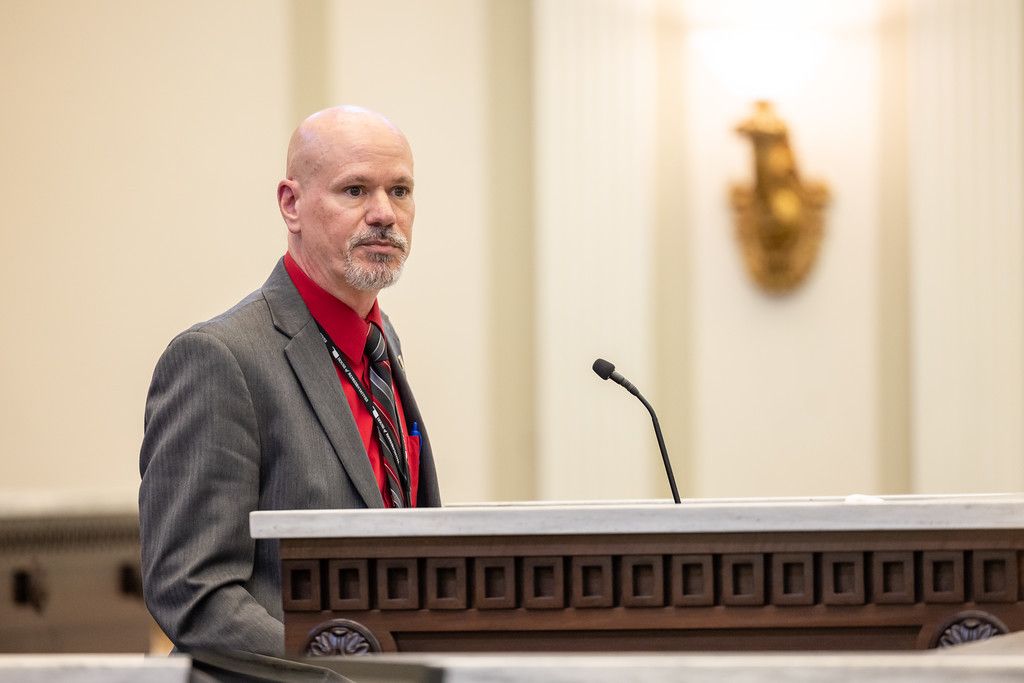
West has represented Moore’s House District 54 since 2016 and previously owned and managed a cabinet shop. He won the Republican runoff with about 58%.
Stands for: Expanding apprenticeships and CareerTech; consistent wage-claim enforcement; workplace safety through partnership rather than punishment-first enforcement; simplifying licensing; fair bidding on public contracts; and an AI and automation task force.
Opposes: Outdated regulations and red tape, and local shops being “squeezed out by out-of-state giants or out-of-country scammers.”
From the right — Pro: A business owner-turned-lawmaker who wants safety enforced through partnership and licensing simplified — regulation with a lighter touch. Con: A decade in the Legislature means he owns part of the regulatory status quo he criticizes.
From the left — Pro: Wage-claim enforcement and fair bidding on public contracts are worker-protection positions. Con: “Partnership over punishment” enforcement worries labor advocates who think fines are what make safety rules real.
Links: Campaign website · Facebook
Kevin Dawson (D)
Dawson is a retired railroad locomotive engineer with 43 years in the industry, including union leadership, and bachelor’s and master’s degrees in administrative leadership from the University of Oklahoma. He is the only Democrat who filed.
Stands for: His “Our Plan” — consistent, fair enforcement of wage and child-labor laws with “no favoritism”; guidance for responsible employers; risk-focused safety inspections; accountability without growing government; and paycheck protection.
Opposes: Wage theft, child-labor violations, and “bad actors” undercutting law-abiding employers. He is wary of red-tape cutting that compromises safety.
From the right — Pro: “Accountability without growing government” and even-handed enforcement are framed to appeal across the aisle. Con: A career union leader is still a hard sell for many conservative voters, whatever the framing.
From the left — Pro: Wage theft and child labor are exactly what this office exists to fight, and he has spent a career on the worker side of the table. Con: His no-growth-government framing may read as conceding the argument before it starts.
Links: Campaign website
Mike Hall (L)
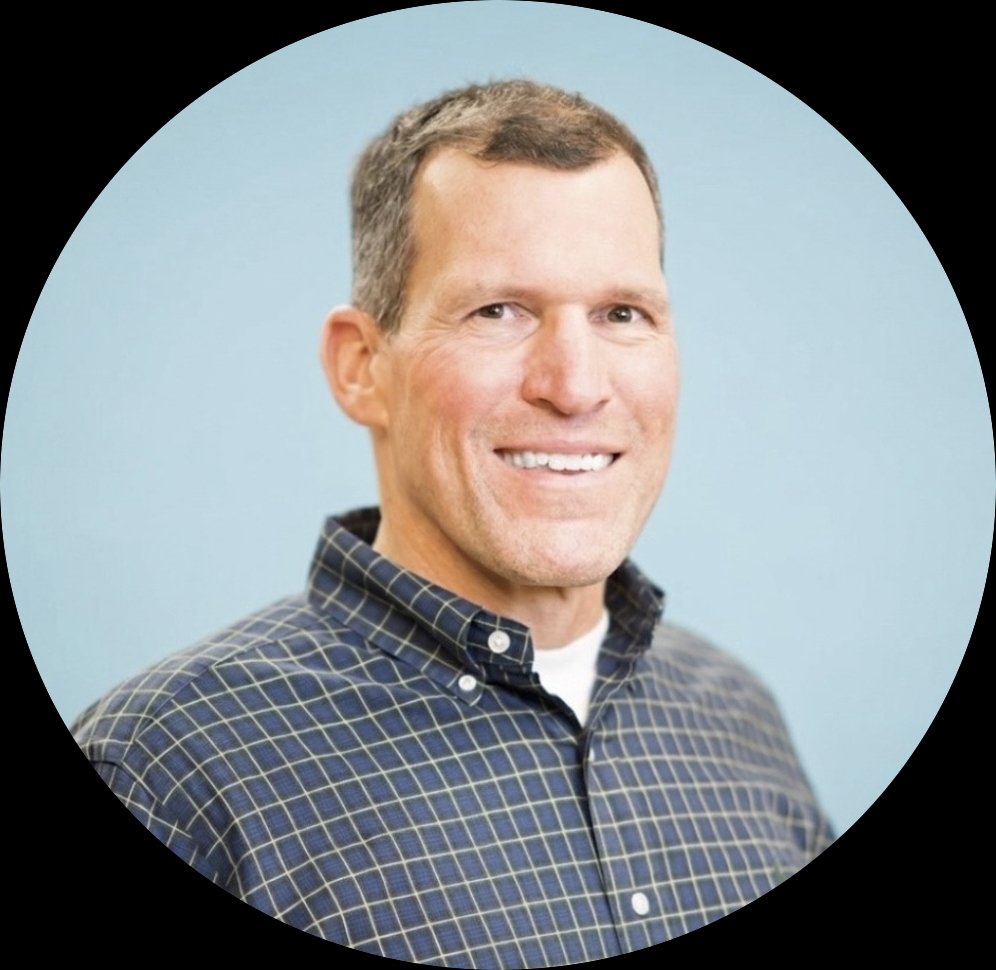
Hall, 59, of Oklahoma City, is an engineering and project-management professional running for the first time.
Stands for: Worker freedom and free markets — wages set by voluntary agreement; licensing requirements only for high-risk professions; honest, consistent enforcement; a transparent office; protecting right-to-work; and outsourcing some inspections, such as elevators, to address inspector shortages.
Opposes: State-mandated wage floors and “regulatory bloat.”
From the right — Pro: The most deregulatory platform in the race, including a practical fix for inspector shortages. Con: Outsourcing state inspections raises accountability questions even for voters who like small government.
From the left — Pro: Honest, consistent enforcement and transparency are baseline goods. Con: Opposition to wage floors and broad deregulation cut against worker protections progressives consider the point of the office.
Links: Campaign website
Insurance Commissioner
An open seat (Glen Mulready is term-limited). Unusually, both candidates are career insurance professionals.
Bob Sullivan (R)
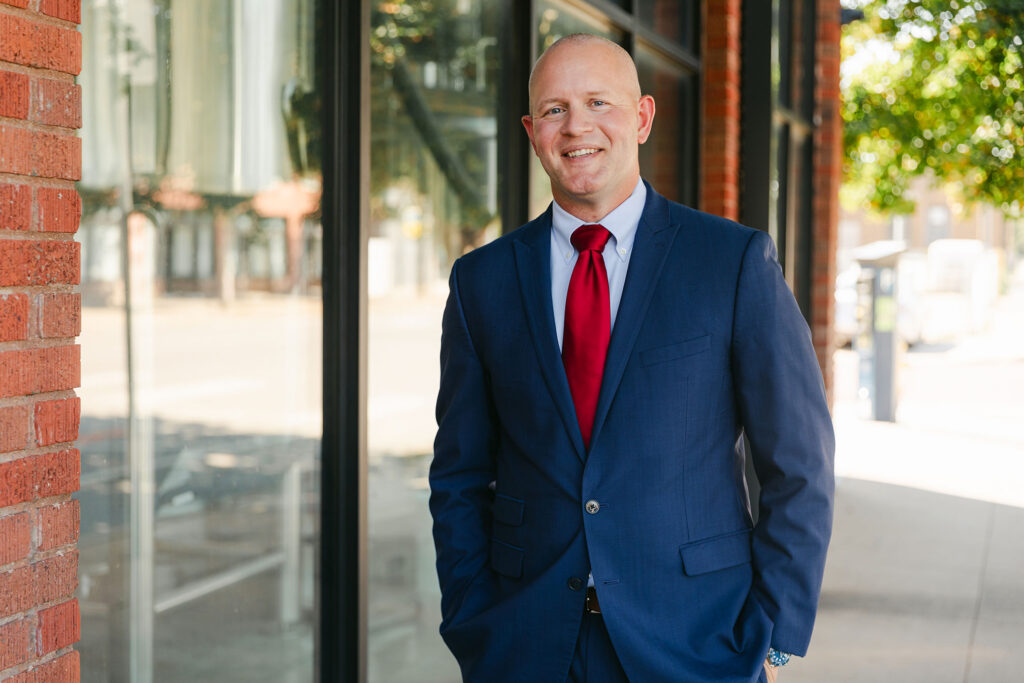
Sullivan, of Inola, has 20 years in property and casualty insurance and risk management (currently with Alera Group), holds the CIC, CRM, and CPCU credentials, and is a political newcomer. He won the Republican runoff with about 55%.
Stands for: “Make Insurance Fair Again” — lowering Oklahoma’s sky-high rates; holding Big Insurance accountable for price-gouging and slow-walked claims and requiring on-time payment; recruiting carriers back into the Oklahoma market; and protecting homeowners and small businesses.
Opposes: Big Insurance, its lobbyists, and “insiders and bureaucrats” — he campaigns as “the fighter Big Insurance doesn’t want.”
From the right — Pro: Homeowners’ insurance costs are a kitchen-table crisis in Oklahoma, and his populist anti-lobbyist pitch comes with real industry credentials. Con: Rate relief is easier to promise than deliver in a hail-and-tornado state, and conservatives wary of populism will ask what regulatory tools he would actually use.
From the left — Pro: Taking on insurers over slow claims and price-gouging is consumer protection progressives support. Con: He is a two-decade industry professional himself, which invites the question of how far the accountability would really go.
Links: Campaign website · Facebook
Craig MacIntyre (D)
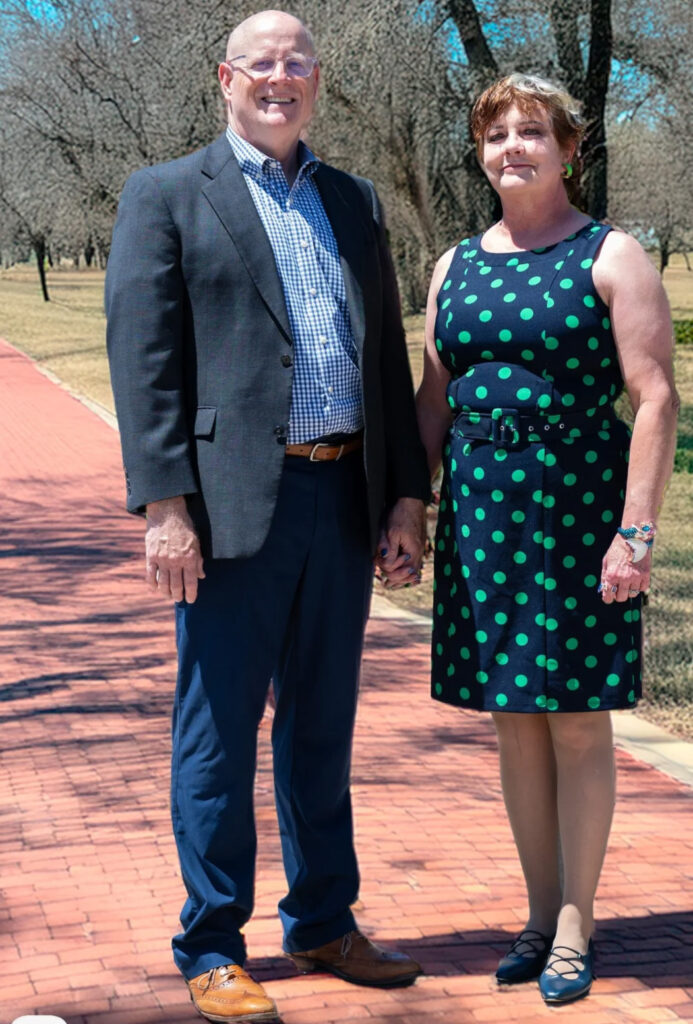
MacIntyre, 60, of Tecumseh, has spent more than 30 years inside insurance companies — actuarial work, underwriting, claims, and regulatory filings — and has also been an educator and small-business owner. He is the only Democrat who filed.
Stands for: His “three A’s”: Affordable rates, using the commissioner’s rate tools that take effect after 2027; Acceptable claims practices, empowering the Consumer Protection Division to track complaint patterns and launch examinations; and Available insurance, recruiting new carriers into the state. He also backs stronger fraud investigations and mandatory mediation on request.
Opposes: His opponent, whom he describes as “funded by special interest groups and the insurance industry”; excessive rate hikes; and insurers passing advertising and luxury costs on to policyholders.
From the right — Pro: Recruiting more carriers and competition is the market-based path to lower rates, and his actuarial background is technical, not political. Con: Giving a consumer division more examination power over insurers reads as regulatory expansion to many conservatives.
From the left — Pro: Complaint-pattern tracking, mediation rights, and fraud enforcement are concrete consumer protections with an expert behind them. Con: Like his opponent, he is an industry insider — progressives get expertise here, not an outsider crusade.
Links: Campaign website
Corporation Commissioner
One of the commission’s three seats is up — the body that regulates oil and gas, utilities, and much of Oklahoma’s energy economy. The term is six years.
Brad Boles (R)

Boles, of Marlow, has represented House District 51 since 2018 and chairs the House Energy and Natural Resources Oversight Committee. He is a former mayor of Marlow and a businessman (Wilco Machine & Fab, Philtek Services). He won the Republican primary with about 55%.
Stands for: Ratepayers first — fair rates balanced with grid reliability; energy independence; streamlined regulation; and protecting land, water, and air alongside energy jobs. He authored HB 2992 (2026), requiring large data-center loads (75 megawatts and up) to pay their own costs rather than shifting them to households.
Opposes: Unnecessary regulation, one-size-fits-all legislative rate-setting, and shifting data-center costs onto residential ratepayers.
From the right — Pro: An energy-committee chairman who already wrote the law making data centers pay their own way — pro-energy and pro-ratepayer in the same package. Con: Career energy-policy insiders can look captured by the industries the commission regulates; conservatives will watch his utility votes.
From the left — Pro: The data-center cost law is a genuine ratepayer protection with bipartisan logic. Con: Progressives see a regulator drawn from the industry’s political wing, unlikely to prioritize orphan wells, injection wells, or climate concerns.
Links: Campaign website · Facebook
Rhonda Eastman (D)
Eastman, of Spiro, spent 16 years as a state employee with the Employment Security Commission before moving into construction project and operations management. A political newcomer, she refuses donations from regulated industries and won her primary with about 70%.
Stands for: A commission that advocates for ratepayers rather than corporations; a pause on new data centers pending an impact study; action on Oklahoma’s 20,000-plus orphan wells; tighter regulation of leaking injection wells; and protecting rural land and water.
Opposes: “Wealthy corporations and their puppet politicians”; one-party control of all three commission seats; data-center tax breaks; and the proposed Inola aluminum smelter.
From the right — Pro: Orphan wells and leaking injection wells are real property-rights and water problems that rural landowners feel directly. Con: A data-center pause and tighter regulation run against the pro-development direction conservative voters have chosen for the state’s energy economy.
From the left — Pro: This is the environmental and anti-corporate-capture case for the commission, with a no-industry-donations pledge behind it. Con: In an oil-and-gas state, her platform’s skepticism of the industry is a general-election liability she wears openly.
Links: Campaign website · Facebook
Not on your ballot: State Auditor
Melissa Capps (R), a longtime deputy auditor, was the only person in any statewide race to file with no opponent at all. Under state law she is elected by default and takes office January 11, 2027 — which is why you will not see the Auditor’s office on Tuesday’s ballot. Her stated agenda: clear the audit backlog (including AI-assisted flagging), protect taxpayer dollars, and rebuild the office’s staff.
Judicial Retention: Nine Judges
Oklahoma’s appellate judges do not run against opponents. The governor appoints them from three nominees screened by the Judicial Nominating Commission — the very body State Question 845 would change — and voters then vote yes or no, judge by judge, on keeping them. A yes majority keeps the judge for another six-year term. A no majority removes them, and the vacancy is filled through the same commission-and-governor process. (One exception below: Justice Jett is on the ballot for the remainder of a term running to January 2031.)
Judges do not campaign on platforms, so instead of invented positions, each entry gives you the facts: the court, who appointed them and when, and anything notable on their record. The general argument, from both directions: from the right, retention votes are the people’s only check on appointed judges, and a “no” vote is the tool when a judge’s rulings drift from the constitution as written; from the left, retention was designed to insulate judges from politics, and voting judges out over single rulings turns courts into campaigns.
Oklahoma Supreme Court
M. John Kane IV — District 1
Appointed by Gov. Kevin Stitt in 2019 — Stitt’s first Supreme Court appointment. He served as the court’s Chief Justice from January 2023 to January 2025. The case for keeping him: an experienced chief justice appointed by a Republican governor, with a full term of appellate work behind him. The case against: voters who believe the court’s recent direction needs changing will note he has been part of its leadership.
Travis V. Jett — District 4
Appointed by Gov. Stitt in April 2025. He succeeded Yvonne Kauger, who in November 2024 became the first Oklahoma Supreme Court justice in state history to lose a retention vote. Jett is on the ballot to serve the remainder of that term, which runs to January 2031. The case for keeping him: he is a recent appointee chosen after voters removed his predecessor; this vote is effectively a verdict on that choice. The case against: he has the shortest record on the court, so voters have the least to judge him by.
Dana L. Kuehn — District 6
Appointed to this court by Gov. Stitt in 2021 (Gov. Mary Fallin had earlier appointed her to the Court of Criminal Appeals in 2017). She is the court’s Vice Chief Justice and the first woman in Oklahoma history to serve on both of the state’s top courts. She was the lone full dissenter in the court’s 2024 decision striking down the contract for the nation’s first publicly funded Catholic charter school. The case for keeping her: a historic, experienced jurist whose dissent in the charter-school case aligned with school-choice supporters. The case against: voters who agreed with the majority in that case will see the dissent the other way.
Richard B. Darby — District 9
Appointed by Gov. Fallin in 2018. He joined the majority in the 2024 decision striking down the St. Isidore Catholic charter school contract as unconstitutional. The case for keeping him: an experienced justice appointed by a Republican governor who has served through two terms of major cases. The case against: the St. Isidore ruling is the defining grievance for voters who wanted the religious charter school to proceed.
Oklahoma Court of Criminal Appeals
Robert L. Hudson — District 2
Appointed by Gov. Fallin in 2015. As Vice Presiding Judge he concurred in the court’s 2023 decision denying death-row inmate Richard Glossip post-conviction relief — a judgment the U.S. Supreme Court reversed in Glossip v. Oklahoma (2025), ordering a new trial. The case for keeping him: a decade of experience on the state’s criminal appeals court. The case against: the Glossip reversal is a high-profile instance of the nation’s highest court finding this court got a capital case wrong.
Oklahoma Court of Civil Appeals
Stacie L. Hixon — District 1, Office 1
Appointed by Gov. Stitt in 2020. No major controversy appears on her public record. For/against: the standard choice — retain an experienced, uncontroversial appellate judge, or vote no on principle against a system some voters consider unaccountable.
Jane P. Wiseman — District 1, Office 2
Appointed by Gov. Brad Henry in 2005 — the longest-serving judge on this year’s retention ballot. She was retained in 2014 despite an aggressive campaign to unseat her. The case for keeping her: two decades of appellate experience. The case against: she is the retention system’s longest-tenured product, appointed by a Democratic governor twenty years ago, which is exactly the profile retention critics target.
Deborah B. Barnes — District 2, Office 1
Appointed by Gov. Henry in 2008. No major controversy appears on her public record. For/against: the standard choice, as with Judge Hixon.
James R. Huber — District 2, Office 2
Appointed by Gov. Stitt in 2023. The most recent appointee on the Civil Appeals ballot. The case for keeping him: a fresh appointee of the current governor with district-court experience. The case against: the shortest appellate record of the four Civil Appeals judges on the ballot.
Decided Earlier: Your Legislators and County Officers
These names will not appear on your November 3 ballot — Oklahoma law declares unopposed and primary-decided candidates elected without a general-election appearance. They are listed so you know who holds the seats.
State Senate District 38 (Sayre, Elk City) — Rick Vernon (R)
Vernon, an Altus attorney and rancher, won the June 16 Republican primary outright with about 51% in a three-way race after incumbent Sen. Brent Howard retired and endorsed him. No Democrat or independent filed. Stands for: recruiting and retaining teachers and improving reading, STEM, and career-tech; rural economic development and housing; and protecting private property rights. Opposes: government overreach, burdensome regulations, and unfair tax hikes. From the right: a conservative rural platform with the outgoing senator’s endorsement. From the left: voters in the district had no general-election choice at all — the race was settled inside one party’s primary. Campaign website
State Senate District 26 (Clinton, Weatherford) — Jessica Winegeart (R)
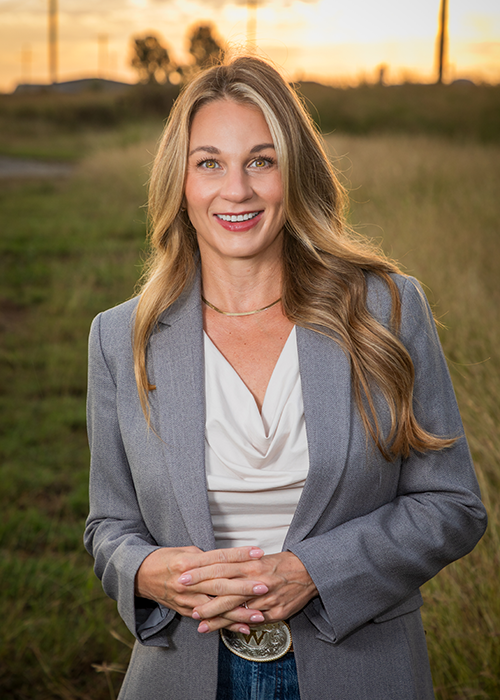
Winegeart, 42, an Okarche/Calumet hay broker who has run her family’s trucking and hay business since 2013 and served five years on the Calumet School Board, won the August 25 Republican runoff, about 55% to 45%, after Sen. Darcy Jech was term-limited. No other party fielded a candidate. Stands for: protecting western Oklahoma water and natural resources; rural public schools — teacher pay, discipline, high standards, and accountability; agriculture and strong small towns; responsible growth and infrastructure; right to life and Second Amendment rights. From the right: a business-owning, school-board-tested conservative focused on water — the district’s defining issue. From the left: as with District 38, the decision was made in a Republican runoff; roughly 9,200 voters chose the senator for a district of far more.
State House District 55 (Elk City) — Nick Archer (R)
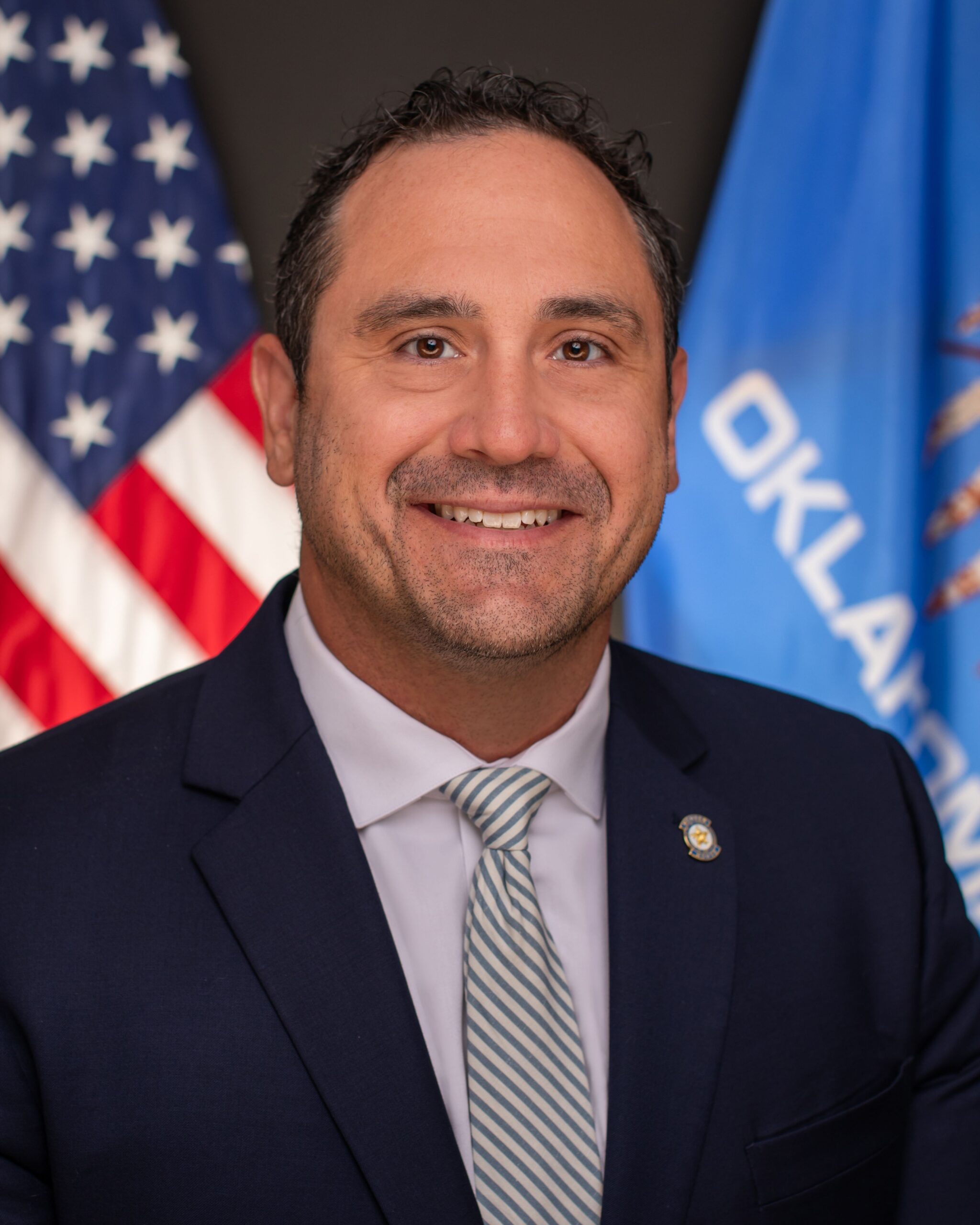
Archer — born in Sayre, raised in Elk City, and Elk City’s mayor for two terms (2019–2022) before going to the House in 2022 — was the only candidate who filed and was reelected by default. He chairs the House Energy Committee. Stands for: economic development, quality of life, Second Amendment rights, and right to life; his signature work is energy policy, including a 2026 interim study on grid-enhancing technologies. From the right: an energy expert representing an energy town. From the left: no opponent filed, so the seat drew no contest at all.
State House District 57 (Sayre, Clinton, Weatherford) — Anthony Moore (R)
Moore, a Clinton attorney and fifth-generation Custer County native in office since 2020, is the House Speaker Pro Tempore — the chamber’s second-highest post. He was the only filer in 2026 and was reelected by default. Stands for: energy and oil and gas, property rights, and education, with a record of pro-life and Second Amendment votes, lower taxes, reduced regulation, and higher teacher pay. Local note: Moore authored the resolution that became State Question 845, below. From the right: the corridor holds the House’s No. 2 seat — real clout for western Oklahoma. From the left: an unopposed reelection means district voters got no alternative to weigh. (His official page is at okhouse.gov/representatives/Anthony-moore.)
Beckham County
- Commissioner District 1 — Butch Goldesberry (R). Won the June Republican primary outright (about 50%) in an open seat. His stated themes: integrity, practical experience, fiscal responsibility, and being the community’s voice — “your voice, your commissioner.”
- Commissioner District 3 — Sammy Carnes (R). Won the August runoff with about 60% in an open seat. No public platform statement was found during his campaign. Campaign Facebook
- County Treasurer — Jennifer Drury (R). Incumbent since a 2016 appointment; the only filer.
- County Assessor — Jonathan Beck (R). Incumbent since 2018; the only filer.
- District Attorney, District 2 — Angela Marsee (R). The district covers Beckham, Custer, Ellis, Roger Mills, and Washita counties. The first woman elected to the post and a former president of the Oklahoma District Attorneys Association, Marsee was the only filer and is elected by default; District 2 has no DA race on the November ballot.
From the right and the left, the same observation applies to the whole Beckham slate: experience and continuity are the case for these officers, and the absence of any general-election contest is the case for paying closer attention to the June primaries, where these races were actually decided.
Custer County
- Commissioner District 1 — Wade Anders (R). The incumbent, a retired Clinton fire chief, won a contested June primary with about 75%. No general-election opponent was found.
- Commissioner District 3 — Lyle K. Miller (R). Incumbent since 2011; no opponent was found.
- County Treasurer — Janet Roulet. The longtime incumbent; no opponent was found.
- County Assessor — Brad Rennels. Incumbent since 2011 and in the assessor’s office since 1994; no opponent was found.
None of the four published a campaign platform we could find. As in Beckham County, the practical lesson for Custer County voters is that the June primary is where county government is actually chosen.
Clinton City Races
Clinton is the only corridor town with city races on the November 3 ballot, and both are contested. Clinton city races are nonpartisan — no party labels appear. Sayre and Elk City hold their next city elections April 6, 2027, and Weatherford’s 2026 city races were decided in August.
Clinton Mayor
David Berrong — Incumbent

Berrong is a third-generation Clintonian who has been mayor about eight years; voters returned him in November 2024 with about 68%. He previously served as an administrative assistant to the Governor of Oklahoma before returning home to the family wholesale distribution business. He chairs the Foss Reservoir Master Conservancy District board and sits on the Mayors Council of Oklahoma and SWODA boards.
Stands for: His theme is “Forward, Together!” — planning with realistic optimism. He campaigns on the roughly $80 million I-40 Exit 65/65A reconstruction (due for completion in late 2028), which he calls Clinton’s greatest economic-development program — he says he led the council’s protest of ODOT’s alternative design until ODOT adopted the design citizens chose; Route 66 tourism (the museum draws roughly 50,000 visitors a year; the Glancy sign; more than $1 million in grants for Firehouse 66 and the Route 66 entry sign) plus sports tourism; restructuring and oversight of Clinton Regional Hospital; marketing the R.O. Water Plant to water-sensitive industry and securing drought water supply; the Clinton Economic Development Authority he led in creating — which hired Clinton’s first economic developer; housing (Redland Addition, Twin Oaks Ridge); recreation, including the water park and splash pad; restoring Meals on Wheels and a low-cost senior fellowship meal; programming for homeless and mentally challenged residents; and beautification, demolition of dilapidated structures, and sidewalks.
Opposes: He has made no direct criticism of his challenger. On the record, he led the position that Clinton should not fund advocacy groups with grant funds, and he opposed ODOT’s alternative Exit 65 design as bringing “little or no economic benefit.”
From the right — Pro: Eight years of relationships and projects in motion — the I-40 interchange, Route 66 grants, the hospital — argue for not changing pilots mid-flight. Con: Eight years is also eight years of the pace many Clinton residents complain about; a conservative who thinks City Hall needs sharper accountability may find the challenger’s platform more pointed.
From the left — Pro: Meals on Wheels, senior meals, homeless services, and public recreation are in his platform by name — social infrastructure progressives value. Con: His challenge from the council’s own ranks suggests the city’s internal frustrations are bipartisan; voters wanting structural change at City Hall may see the insider-outsider contrast differently.
Links: Campaign website
Ernie Dowdell — Challenger
Dowdell is Clinton’s sitting Ward 2 councilman, born and raised in Clinton, married 27 years with three children raised here. He says council service has given him firsthand knowledge of city operations and finances. (No photo of Dowdell could be verified for publication; his campaign is on Facebook, linked below.)
Stands for: All from his published campaign announcement: fresh leadership and “stronger accountability at City Hall”; a five-, ten-, and twenty-year plan addressing water, infrastructure, economic development, and other long-term needs; a more aggressive approach to business recruitment, development, and sales tax growth — finding opportunities Elk City and Weatherford don’t have rather than copying them; reviewing city fees and utility costs; pursuing state and federal grants; simplifying permits and inspections, citing contractors and tradespeople facing “unnecessary delays and paperwork”; restoring clear lines of responsibility, with the mayor and council setting direction and the city manager running daily operations; and treating residents “like customers, because they are the ones paying the bills.”
Opposes: The status quo, by name: “years of frustration with stalled projects, slow decision-making, and a lack of strategic direction.” His announcement states: “We can’t stay in the status quo any longer. We are stuck.” He points to Elk City’s and Weatherford’s growth as evidence Clinton cannot afford to remain stagnant.
From the right — Pro: Accountability, fee and utility-cost reviews, simpler permits, aggressive business recruitment, and a written long-range plan — a managerial conservative’s platform, from an insider who knows where the bodies are buried. Con: He has been part of the council he criticizes, and his platform is process-heavy; the big projects he promises to move faster were delayed by funding and state agencies as much as by City Hall.
From the left — Pro: Grant-seeking, infrastructure planning on a 20-year horizon, and treating residents as customers of public services speak to competent, active government. Con: His critique is about pace and management, not about expanding services or equity; progressive voters looking for a policy departure will find more continuity than change.
Links: Campaign Facebook
Clinton City Council — Ward 4
An open seat (incumbent Arthur Lloyd is not on the ballot), and unusual: both candidates are former Ward 4 councilmen running to return.
Bobby Stewart
Stewart won the Ward 4 seat in a November 2016 runoff as a self-described political newcomer, served at least through 2020, and lost a narrow rematch to Lloyd in 2024 — 173 votes to 182. He has also served as adjutant and post commander of Clinton’s American Legion Post 41.
Stands for / opposes: No 2026 platform, campaign website, or campaign Facebook page could be found for Stewart — not in local papers, not online. What voters have to judge is his prior council service and his 2024 showing.
From the right — Pro: He has done the job before, came within nine votes of winning it back in 2024, and his Legion leadership is local-service credibility. Con: A candidate asking for the seat back owes voters a public statement of what he would do with it; none was published.
From the left — Pro: Prior council experience and veterans’ service are real qualifications for a ward seat. Con: With no stated positions, progressive voters in Ward 4 cannot know where he stands on housing, utilities, or development.
Lucas Martinez
Martinez was appointed in February 2013 to fill the Ward 4 vacancy left by Phyllis Smith and served through 2016. Running as the incumbent in August 2016, he finished third in a three-way race behind Sami and Stewart.
Stands for / opposes: Like Stewart, no 2026 platform, campaign website, or campaign Facebook page could be found for Martinez. His record is his earlier appointed-and-elected council service.
From the right — Pro: He has sat in the seat (by appointment and election) and knows ward issues firsthand. Con: He has been out of the seat for a decade, finished third the last time Ward 4 voters judged him as an incumbent, and has published nothing about what he would do now.
From the left — Pro: Council experience without a machine behind him; Ward 4 gets a representative who has done the work before. Con: No platform means no commitments to evaluate — the same blank page as his opponent.
Ward 4 voters: with neither candidate publishing a platform, the Chamber’s candidate forum and your own knowledge of their earlier council service are the best evidence available. Ask them directly — both are Clinton neighbors, and both have records from previous terms you can weigh.
State Question 845 — The Judicial Nominating Commission
(Official ballot title, condensed from the Secretary of State’s filing; the full text appears on your ballot.) This measure amends Article 7-B, Section 3 of the Oklahoma Constitution to change the Judicial Nominating Commission’s structure. Appointments would no longer be based on congressional districts as they existed in 1967. The Governor would appoint six members (one from each current congressional district), the Oklahoma Bar Association six (one per district), and at least eight commissioners would select three at-large members. Any number of commissioners could be licensed attorneys; the ban on commissioners whose immediate family members practice law would be removed. At-large commissioners would serve two-year terms and all others six-year terms. Party-membership restrictions on the Governor’s and at-large appointees would be removed, and commissioners could succeed themselves. The measure has no fiscal impact. Shall the proposal be approved?
What a YES vote does: Rewrites how the 15-member commission that screens Oklahoma’s appellate judges is chosen — today’s congressional map instead of the frozen 1967 map; lawyers (and people with lawyers in the family) allowed in seats now reserved for laypeople; the party-balance caps removed (today no more than 3 of the Governor’s 6, and no more than 2 of the 3 at-large members, may share a party); and commissioners allowed to serve consecutive terms, up to 12 years. It phases in as seats open. Corridor note: the measure’s House author is our own Rep. Anthony Moore of Clinton.
What a NO vote does: Keeps the system voters created in 1967 after a Supreme Court bribery scandal — 1967 districts, layperson seats, party caps, and single-term limits — exactly as it is.
Supporters say: The current map is nearly 60 years old and no longer matches Oklahoma’s districts; the structure effectively advantages the minority party (Sen. Todd Gollihare, the Senate author, argues the majority party holds fewer seats than the minority under the current design); qualified Oklahomans should not be disqualified for being attorneys or having attorneys in the family; and experienced commissioners should be allowed a second term for institutional knowledge (Sen. Julie Daniels).
Opponents say: The Oklahoma Policy Institute, which rarely takes positions, urges NO — the safeguards exist because Oklahoma has had judicial corruption before, and removing them invites a more partisan commission and a more polarized court system. Rep. Andy Fugate argues the structure is deliberately designed to bring multiple parties to the table. The Oklahoman’s editorial board recommends NO, saying the measure “would remove the guardrails that have existed for the past 60 years.” No organized campaign committee exists on either side.
The conservative take — Pro (vote yes): The commission’s structure should reflect the state voters actually live in: the modern map, and a selection process that does not systematically mute the majority party’s voice. Letting commissioners serve a second term keeps experience in the room. Con (vote no): Conservatives skeptical of concentrating power will note the changes let one party dominate the body that picks judges, and the 1967 safeguards were written by Oklahomans who had just watched justices take bribes — original intent worth respecting.
The progressive take — Pro (vote yes): The 1967 district map is genuinely indefensible as geography, and excluding people from public service because a sibling is a lawyer is arbitrary. Con (vote no): This is the rare point of agreement between OK Policy and The Oklahoman’s editorial page: party caps and lay seats are the load-bearing walls of judicial independence, and removing them politicizes the courts for a generation.
State Question 847 — Property Tax Assessment Caps and the Senior Freeze
(Official ballot title, condensed from the Secretary of State’s filing.) This measure amends Article 10, Sections 8B and 8C. Today, annual growth in a property’s fair cash value is capped at 5% for most real property and 3% for homesteads and agricultural land. If approved, for tax year 2027 and after, the caps become 4% and 1.75%. The senior freeze — which today fully freezes taxable value for homeowners 65 and older under an income limit — is replaced with income tiers tied to HUD’s median income for the county: at or below 100% of median, value stays frozen at 0%; above that, caps step up by income — 0.35%, 0.7%, 1.05%, 1.4%, up to 1.75% above 180% of median. The measure has a fiscal impact on the state, amount unknown. Shall the proposal be approved?
What a YES vote does: Slows the growth of the taxable value your property tax is calculated on — it does not cut your current bill or change tax rates. Every property owner is affected, and so are the schools, CareerTechs, counties, and cities that property taxes fund. The Oklahoma Tax Commission projects local jurisdictions would collect about $45.78 million less next year than they otherwise would. One widely misunderstood point: seniors at or below their county’s median income keep the full 0% freeze. What changes for seniors is the cliff — today, one dollar over the income limit means no protection at all; under 847, higher-income seniors get partial caps instead.
What a NO vote does: Keeps the 3% homestead/agricultural and 5% general caps, and the current all-or-nothing senior freeze.
Supporters say: Authors House Speaker Kyle Hilbert and Senate Pro Tem Lonnie Paxton argue Oklahomans begged for relief as values (and maximum 3% increases) compounded year after year; the $45.78 million is “$45 million saved to taxpayers,” local entities still collect more than the year before — just growing more slowly — and 1.75% would be the lowest homestead cap in the nation. The Oklahoma Farm Bureau supports it: farmers “can lose money on land in a given year while their property taxes keep climbing.” Americans for Tax Reform also backs it.
Opponents say: OK Policy urges NO: it is not a tax cut, and because local governments must still pay voter-approved bonds, they may raise millage rates — raising bills for everyone, including frozen seniors. Critics add that big corporations holding large amounts of Oklahoma property capture much of the benefit; that caps shift costs onto new homebuyers (values reset at sale, so identical houses on the same block can be taxed very differently); and that a below-inflation cap erodes school and local budgets for years — one estimate runs to roughly $241 million in lost local revenue by year five and $457.8 million over ten years. Oklahoma City Mayor David Holt (R) opposes it, as does The Oklahoman’s editorial board.
The conservative take — Pro (vote yes): Property tax is the tax homeowners feel most directly, and a government that can raise your taxable value 3% every year forever has a ratchet, not a budget. Slowing growth — while revenue still rises — is restraint without cuts, and the senior tiers fix a genuinely unfair cliff. Con (vote no): Conservatives who prize local control will note this is the state constitution dictating terms to local voters who approved their own bonds; the likely millage response could raise rates on the very people it claims to help, and the biggest winners may be the biggest corporate landowners.
The progressive take — Pro (vote yes): Assessment spikes fall hardest on fixed-income homeowners and can tax people out of homes they own outright; the tiered senior structure is more progressive than the current cliff, and relief should not require selling your house. Con (vote no): Property taxes fund schools, and in rural Oklahoma they are nearly the only local revenue there is; a permanent below-inflation cap starves classrooms and shifts the burden to young families buying their first homes.
Before You Vote
- When: Tuesday, November 3, 2026, 7 a.m.–7 p.m. Bring a photo ID or your voter registration card. If you are in line at 7 p.m., stay — you can vote.
- Your ballot: Not every precinct sees every race above. Check your personal sample ballot in the OK Voter Portal at oklahoma.gov/elections before you go.
- Questions: Beckham County Election Board, 306 E. Main St., Sayre, 580-928-3314. Custer County Election Board, 633 N. 6th St., Clinton.
However you vote on each of these, vote informed — that is what this guide is for. Share it with a neighbor who is still deciding.